
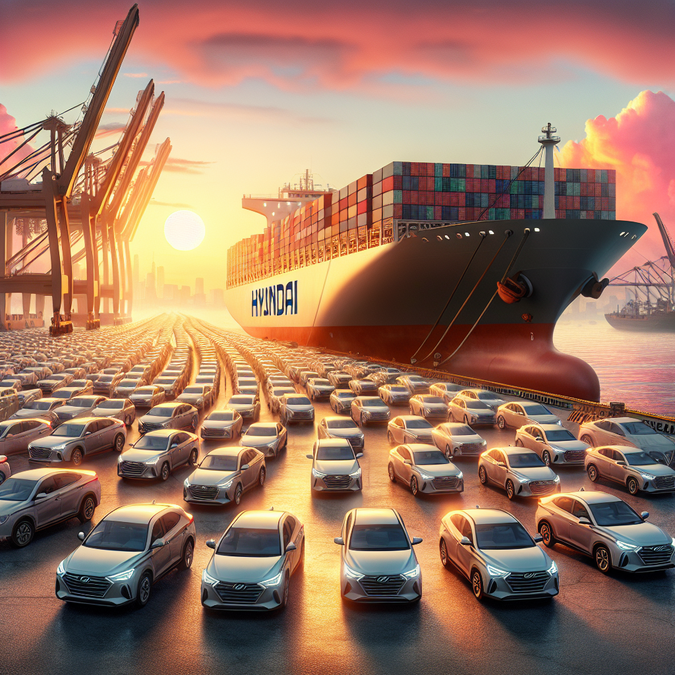
In an evolving automotive landscape, Hyundai Motor India Ltd faced a notable decrease in sales for August, recording 60,501 units compared to 63,175 units sold during the same month last year. This represents a 4.23% decline. However, this downturn isn’t merely a reflection of the company’s performance. It signals a deliberate strategic pivot. Hyundai appears to be recalibrating its focus away from domestic sales to bolster its export initiatives. This move, though seemingly counterintuitive amidst declining sales, could position the company for long-term adaptability and success.
The automotive industry is bracing for numerous challenges, driven by shifts in consumer behavior and global economic fluctuations. By intensifying its export strategy, Hyundai may be aiming to offset the domestic sales slump with international demand, tapping into markets where opportunities may be more fertile. This decision could mitigate risks associated with over-reliance on a single market, while increasing its presence in burgeoning economies, particularly in regions experiencing burgeoning demand for reliable automotive solutions.
Hyundai’s ability to scale its operations and strategize for global expansion underscores its progressive approach to navigating industry dynamics. The company’s strategic shift might also indicate its intention to take advantage of comparative advantages, such as cost efficiencies gained from manufacturing in India and distributing internationally. With increased competitive pressures in the global market, Hyundai’s renewed focus on exports could lead to a reinvention of its role on the world stage, showcasing its capacity to innovate and compete internationally.
From another perspective, Hyundai’s dip in local sales could also speak to its evolving consumer engagement strategies. The shift might reflect changing priorities to focus on segments that offer higher profit margins or align with evolving environmental norms. This could lead to investing in newer technologies or forming partnerships that focus on sustainability, appealing to a broader range of consumers globally. Such strides can build a solid foundation for Hyundai to cement its status not just as a car manufacturer, but as a leader in sustainable transport solutions.
In conclusion, Hyundai’s sales dip in August, juxtaposed with its shift towards enhancing export operations, may well be a calculated move designed for strategic realignment rather than purely reflective of reduced demand. This forward-thinking approach indicates Hyundai’s resilience and adaptability amidst changing market conditions. As the company navigates these uncertain waters, its commitment to strengthening its global footprint could prove instrumental in securing a competitive edge and ensuring sustained growth and innovation in the years to come.
Leave a Reply